.jpg)

It’s Sunday. Nothing is wrong.
You slept enough. You did the things you were supposed to do. The week wasn’t particularly bad. And yet here you are, sitting inside a life that looks completely fine on paper, feeling almost nothing at all.
Not sad. Not anxious. Not in crisis. Just… flat.
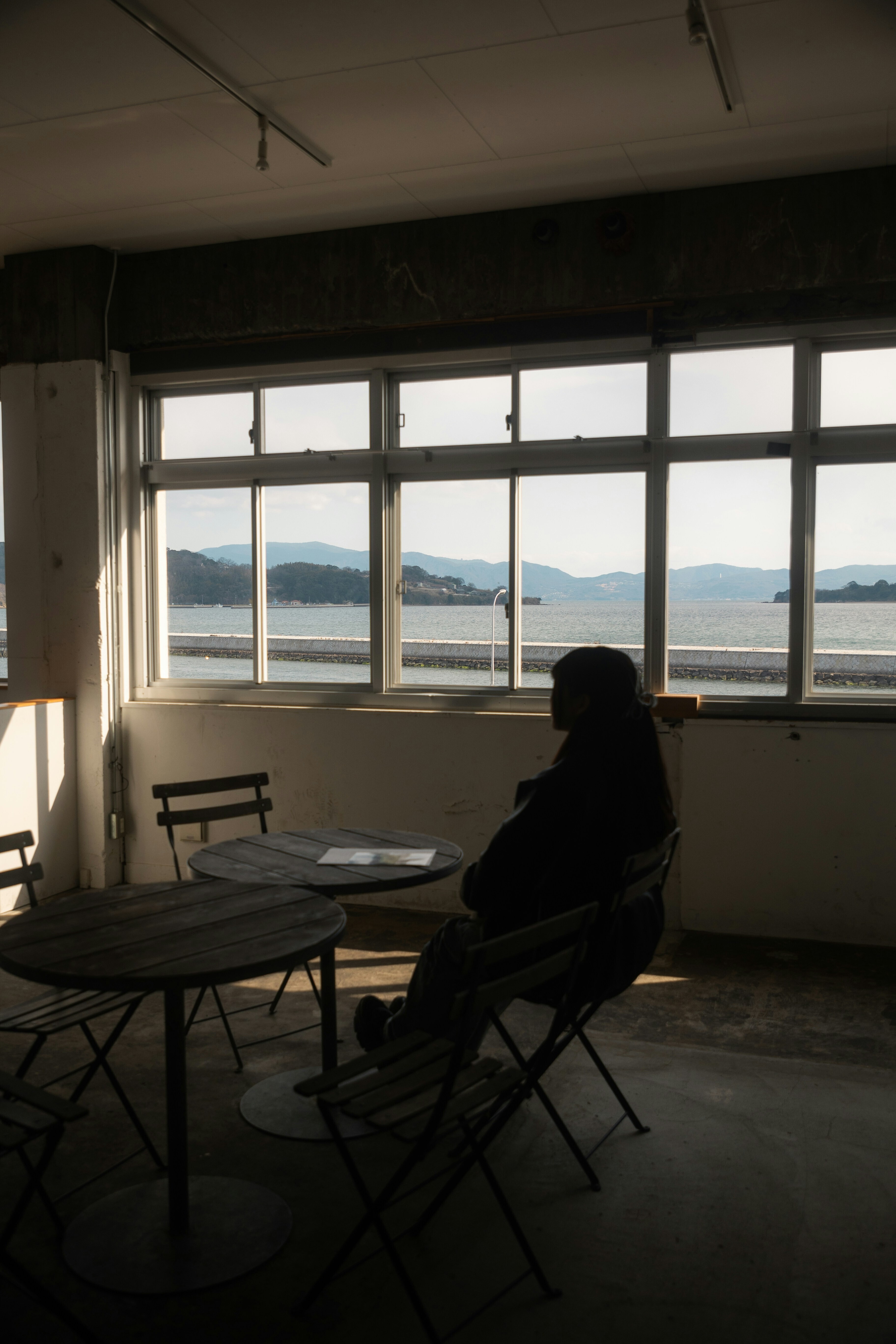
You scroll. You watch something. You go through the motions of a weekend, food, conversation, maybe a walk, and the whole time there’s this slight remove, like you’re watching yourself from a few feet back. Present, technically. But not quite there.
And somewhere underneath the flatness is a question you keep circling back to: Is something permanently wrong with me?
This is what emotional numbness actually looks like and it doesn’t usually look like the version people talk about.
It’s not dramatic. It’s not a breakdown. It’s not even being visibly sad or shut down. It’s smaller than that. It’s watching a movie that would have made you cry two years ago and feeling nothing. It’s getting good news and noticing that you feel mildly pleased, not actually happy. It’s being with people you love and still feeling alone in the room. It’s going through an entire week of your own life and not feeling particularly invested in any of it.
Sometimes it shows up as a reduced range the highs don’t hit the way they used to, and the lows feel more like a hum than a crash. Sometimes it’s an inability to access something you know you feel. You know you care about this person. You know this matters to you. But there’s a wall between knowing it and actually feeling it.
It’s not emptiness, exactly. It’s more like the volume got turned way down, and you can’t find the dial.
Here’s what tends to happen, psychologically, when someone carries a lot for a long time.
The mind is smart. It is also, in many ways, ruthlessly efficient. When a person lives in sustained stress chronic pressure, emotional overload, the kind of ongoing strain that doesn’t come with a clear end date the system does something practical. It starts dampening the signal.
Emotions are information. They require energy to process. When the system is already overwhelmed, it begins filtering. Not deliberately, not consciously, it just starts dialing back the intensity of the signal to keep you functional. To keep you moving. To keep you from burning out completely.
Over time, with enough sustained suppression, this can become the default setting. The filtering that was once temporary starts running automatically. Your nervous system gets practiced at not fully feeling things, because for a long time, not fully feeling things was the most adaptive thing it could do.
This is not a character flaw. It’s not weakness. It’s not something that happened because you’re broken in some fundamental way. It’s the result of a system doing exactly what it was designed to do protect you from being overwhelmed by more than you could handle at the time.
The numbness is not a malfunction. It’s a response.

There’s another layer worth sitting with, especially for those who grew up in homes or communities where emotional expression wasn’t exactly safe.
When feelings were consistently met with dismissal, you’re too sensitive, stop being dramatic, other people have it worse, the body learns. When showing emotion meant becoming a target, or adding to someone else’s burden, or simply not being understood, the body learns that too. When your community’s survival depended on staying composed, on functioning despite everything, on not falling apart in front of people who might use it against you, the body learned to hold all of that and keep moving.
Emotional suppression in that context wasn’t a choice. It was an adaptation. And a sophisticated one at that.
A lot of people who grew up in those environments are now adults who don’t know how to access their own feelings in safe moments, because safety wasn’t the context the skill was built in. The numbness they carry isn’t personal failure. It’s the residue of navigating environments that required them to shut down their signal in order to get through.
That’s worth acknowledging. Not as an explanation to hide behind, but as an honest reckoning with what you were actually up against.
So here’s the reframe.
The numbness isn’t what’s wrong with you. The numbness did something. It helped you survive a period, a relationship, a dynamic, a standard of living that would have crushed you if you’d felt all of it fully. It kept you functional. It kept you moving. In a very real sense, it kept you safe.
The question isn’t what’s wrong with me?
The question is: What was I protecting myself from and do I still need this level of protection right now?
That’s a different question. A more honest one. And honestly, a harder one because answering it requires looking at what was happening around you when the dial started turning down. What you were carrying. What you weren’t allowed to put down.
The path back to feeling isn’t about forcing yourself to emote, or willing yourself to feel things you currently can’t access, or deciding to “be more present” as a personal project. It’s usually slower and more specific than that. It starts with understanding why the wall went up in the first place not to blame yourself for it, but to see it clearly. To stop treating the defense like the disease.
If you’ve been sitting with this for a while this particular flatness, this sense of watching your own life from a slight remove a conversation is one way to start.
Not because something is wrong with you. But because you’ve been carrying this quietly for long enough, and some things become clearer when you don’t have to figure them out alone.
Project Whisper Counselling & Psychotherapy offers therapy and emotional wellness support across Canada, in-person and virtually. When you’re ready to Start the Conversation, we’re here.





.png)